
METHOD OF COOKING
Why we cook food
→Cooking improves the Flavor and appeal of the food.
Cooking makes Food safe for Eating as it kills Microorganisms which may be Present in the food.
Cooking makes food Easier to chew, and More Digestible.
Cooking Destry some of Enzymes, which cause Food to spoil. It Thus Prolong the shelf life of the food & maintain its quality
Cooking Introduces variety. Many different types of dishes can be prepared with the same ingredients.
Cooking helps to provide a balance meal.
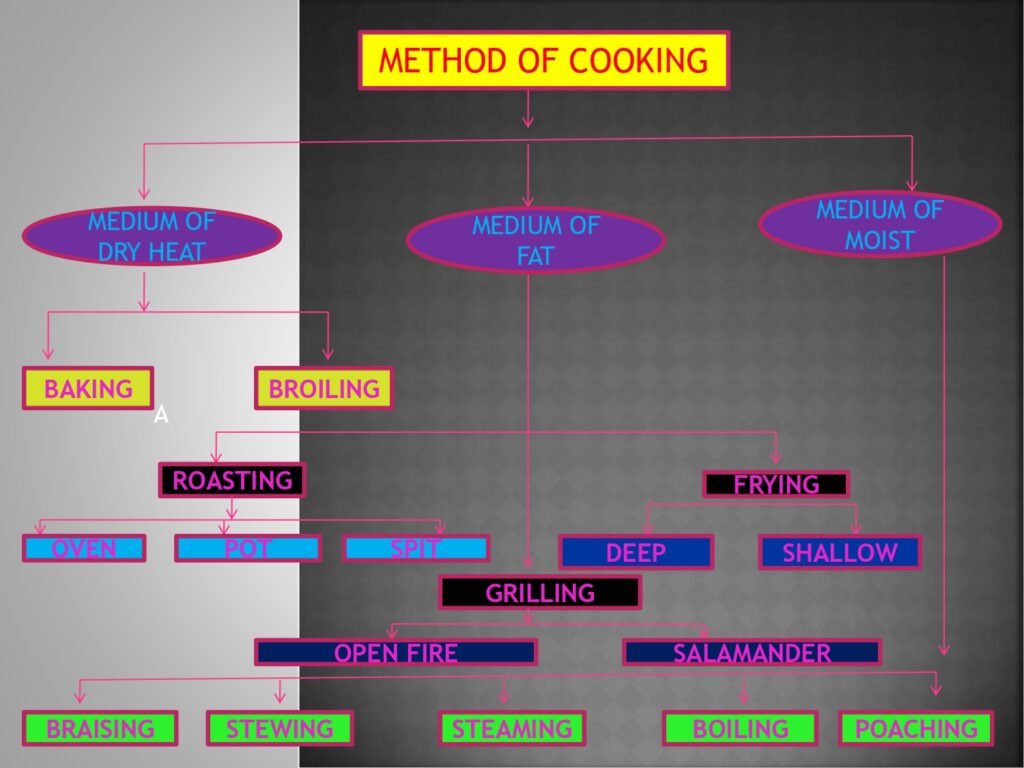
Medium of dry heat
BAKING
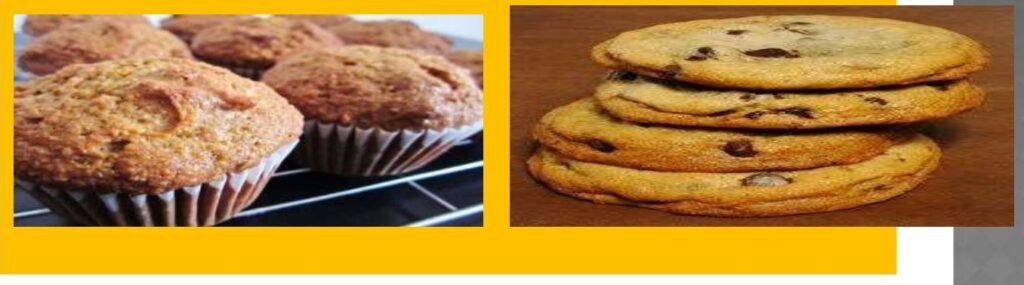
- Cooks’ food by Dry heat in an enclosed space.
- The action of dry heat is modified by the steam which arises from the food whilst cooking
Comon Dishes are like,
Cakes, pastry, pudding bread etc.
Advantages: –
Large Amount of Food can be Cooked at the same time
Cooking Process Does Not Require Constraint Action.
Baked food is Soft and easy to digest
Disadvantage: –
Takes a long time to cook food, Sometimes up to a few hours.
Medium of dry heat: –
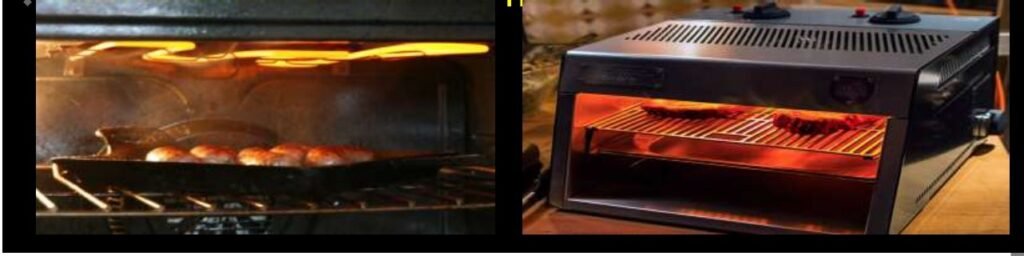
Broiling: –
Food is cooked directly under a heat source (the top element of either-or electric oven).
The temperature used is typically very high however, how close the food is placed in relation to the element will determine how quickly the food will cook and brown.
Thin cuts of meat, poultry, fish and vegetables can all be broiled. Breads can be toasted.
Advantage: –
- Quick cooking method. Broiling foods in broiler pans is a great time saver. It is quicker to broil meats than roasting meat.
Low fat cooking. Additionally, because the fat from broiled meats drips away from the food resting on the grill, rather than allowing the food to cook in the fat, broiling is a much lower fat cooking Method.
Disadvantages: –
- Food can be over cooked.
Roasting: –
Cooking Meat, poultry, game or fish by exposing it the heat of a naked flame or grill (spit Roasting) or to the radiant heat of an oven (oven roasting) cooking it evenly on all sides with temperature of at least 150 degrees (300 degrees F) from an open flame, oven or other heat source. Roasting can enhance flavor through Caramelization and Maillard browning on the surface of the food.
Examples of the foods which might be cooked by roasting – Meat (Lamb, Beef, Pork, Veal)
Poultry and game (duck, chicken, Pheasant) – Vegetables (potatoes, Parsnips)
Roasting Generally 3 Types
- Oven Roasting.
- Spit Roasting.
- Pot Roasting.
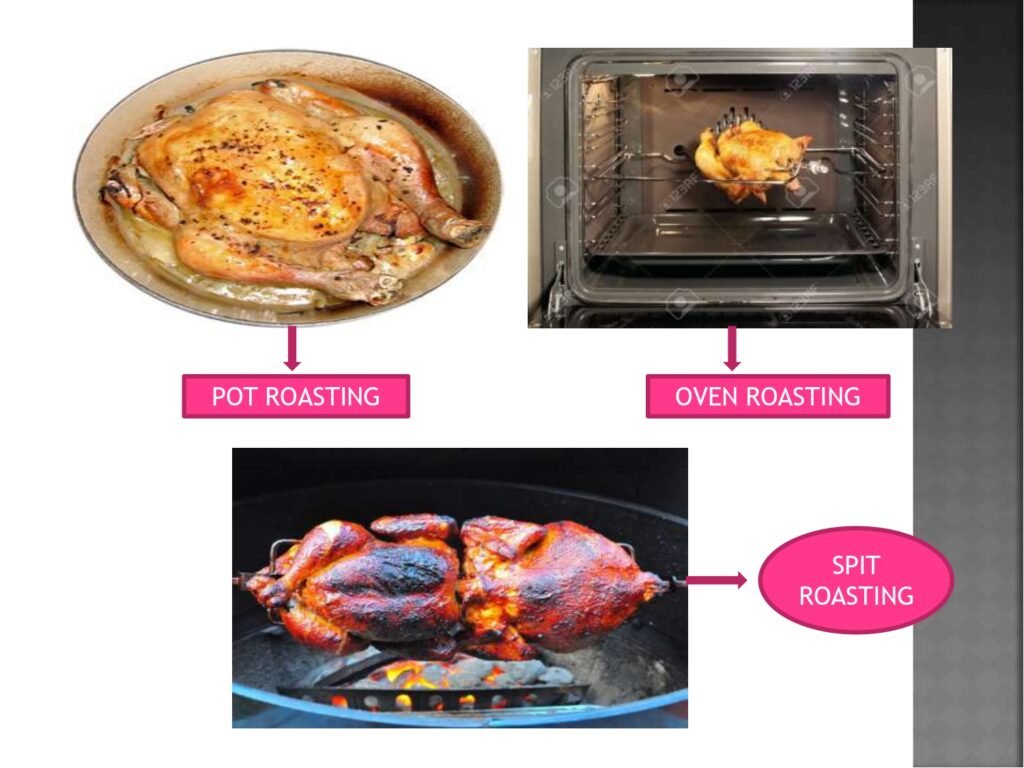
Pot roasting
This method is used to cook small joints and birds, if no oven is available, but a thick heavy pan is essential. Enough fat is melted cover the bottom of the pan. When the fat Is hot the joint is browned. It is the lifted out and 2-3 skewer are put into the, pan on which their joint is placed. The joint should just touch the fat., the pan is then covered tightly with a well-fitting lid and cooked over a very slow fire.
oven Roasting: –
This is cooking in a closed oven with the aid of fat. The meat should be put into a very hot oven to seal the surface. It should be rest on a rack, to keep it out of its own fat and juices and should be basted frequently.
Spit Roasting: –
The food to be cooked is brought in direct contract with the flame of a clear, bright fire. The food is based with fat and is turned regularly to ensure even cooking and browning.
Advantage and disadvantage of roasting: –
Advantage: –
- Minimum fire risk
- Meat juices from the Meat can be used for gravy which enhance the flavor.
- Gives a verity to the menu.
Disadvantages: –
- Constant attention is required.
- Losses of nutrients like amino acids.
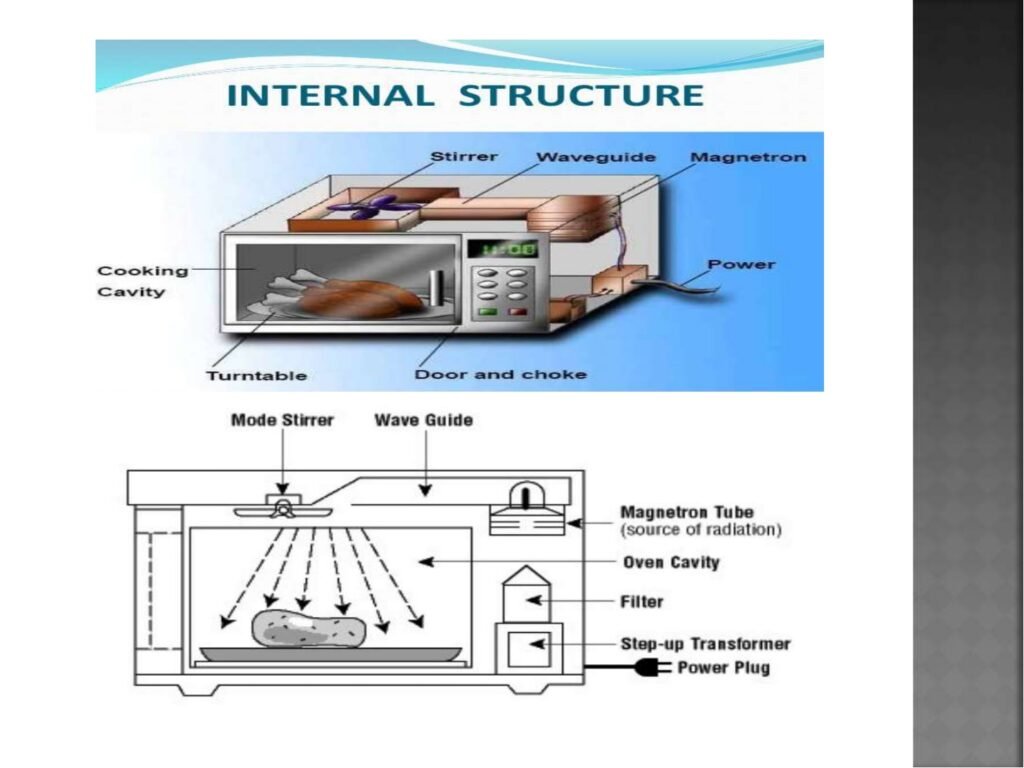
MICROWAVE COOKING: –
Microwaving is cooking, defrosting or reheating food using electromagnetic waves.
Microwaves agitate particles of water or food causing heat by friction.
it’s very fast way of cooking that can helps with some food safety issues and makes food palatable and digestible.
Grilling, Griddling, Pan Broiling
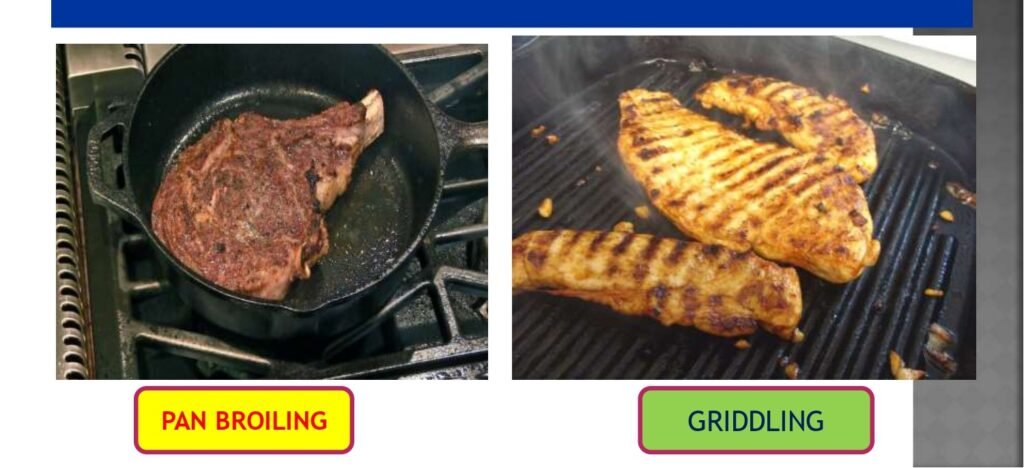
Grilling: –
- Grilling is done on an open grid over a heat source, which may be Charcoal, an electric element or gas heated. Moving the food items from hotter to cooler places on the grill regulates cooking temperatures. Grilled items must be turned over once during the cooking process to ensure even cooking.
Griddling: –
- Griddling is done on a solid cooking surface called the griddle, with or without small quantities of fat. To prevent sticking. The temperature is adjustable and is around 350 degrees F/177 degree C, this is much lower than on a grill, in addiction to meats, items such as pancakes and eggs can be cooked on a griddle, grooved griddles have a solid top with raised ridges and are designed to cook like grills and leave desirable marks on the surface of the food. Although they may appear the same as food cooked on the grill, meats cooked on the griddle do not have the charcoal -grilled flavor imparted while cooking on a grill.
Pan – Broiling: –
- Is liked griddling, expect it is done on a frying or sautéed pan or skillet instead of on a griddle surface. Fat must be poured off as it accumulates, or the process would become pan frying.
Advantages: –
- speed of grilling enables food to be quickly cook to order.
- Charring foods gives a distinctive appearance and improves flavor.
- Control of cooking is aided because food is visible whilst being grilled.
- variety is given to menu and diet.
- Grills may be situated in view of the guest.
Disadvantage: –
- Grilling requires that the food should be of premium quality, which turns out to be quite expensive.
- also, it requires a certain level of skill in order to prepare perfect grilled dishes.
- it’s not a basic method that can be used by everyone.
FRYING: –
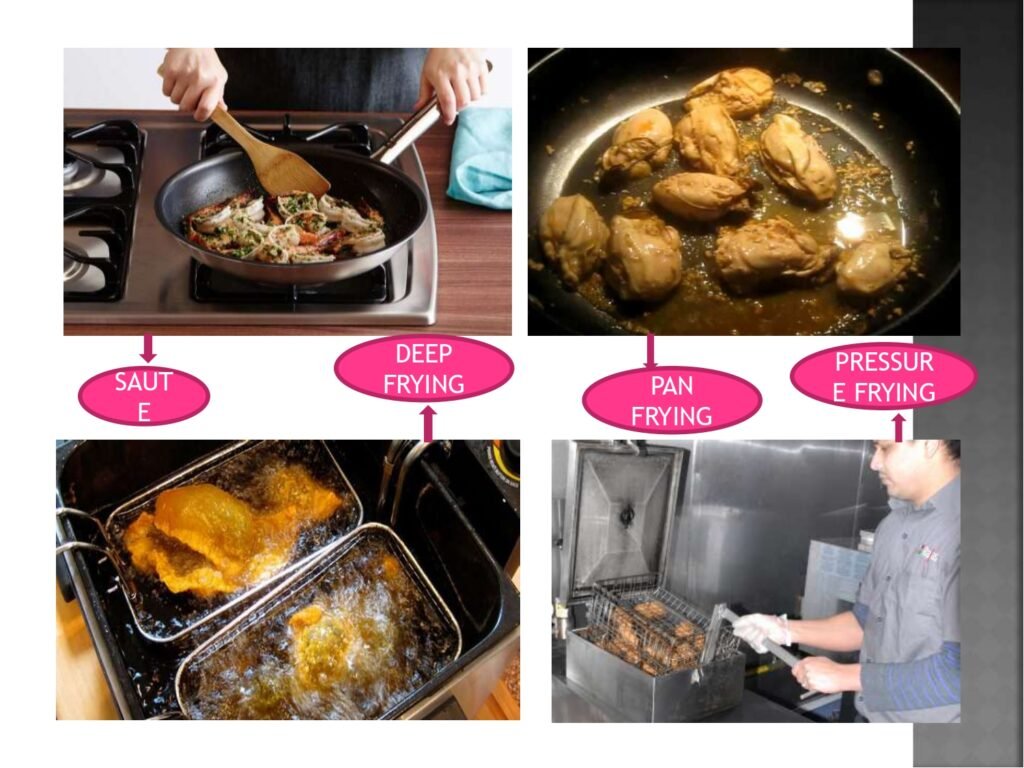
SAUTED
To Sautéed means to cook in small amounts of fat.
- the French word sautéed means ”to jump” referring to the action of tossing small paces of food on a sautéed pan. However, larger slices of meat or vegetables could be sauteed without actually tossing.
PAN FRYING: –
To pan – fry means cook in a moderate amount of fat in a pan over moderate heat.
- Pan frying is similar to sauteed expect that more fat is used and the cooking time is Longer. Larger items are used and it not possible to toss them.
- Pan frying is normally done over lower heat than sautéing, because larger pieces are being cooked.
- The amount of fat used depends on the food being cooked. Only a small amount will be required for eggs, but meat and fish items would require a bit more.
- Most food items would be required to be turned over at least once for even cooking.
DEEP FRYING: –
To deep fry means to cook food submerged in hot fat. Quality in deep fried product is characterized by the following properties.
- Minimum fat absorption.
- minimum moisture loss (not over cooked)
- Attractive golden color.
- Crisp coating or surface.
- No off flavor (sometimes imported by the frying fat) many foods are dipped in a breading or in a batter before frying. These forms a protective coating between food and fat and helps give the product crispness, color and flavor.
PRESSURE FRYING: –
Pressure frying means deep frying in a special covered fryer that traps the steam given off by the food being cooked and increases the pressure inside the kettle. Pressure frying requires accurate timing, because the product cannot be seen while it is cooking. In a standard fryer, even though the fat may be at 350 degrees F (175 degree C) The temperature inside the food will not rise above 212 degrees F(100 Degrees C), The boiling point of water. In a pressure fryer, this temperature is raised and cooks the food much faster without excessive browning. At the same time, the fat temperature could be lower (325degrees F/165Degrees C).
ADVANTAGE: –
Low in calories and fat-
Cooking food in a tandoor is a dry cooking method where food cooks in its own natural juice. You do not need to add extra oil or butter in the food.
Hence, food cooked in a tandoor contains less fat than fried foods. Reduced intake of fat helps lower cholesterol level in the blood, preventing several cardiovascular diseases.
Great flavor: –
Charcoal- cooked foods impart smoky flavor to the food which may not be present in foods cooked on gas. Smoky flavored food tastes great.
Negligible loss of nutrients
Cooking food in tandoor ensures no loss of nutrients from the food. As you can cook foods in a less time, there is negligible loos of vitamins from the vegetable and Chicken.
DISADVANTAGE: –
Produce Carcinogens
Cooking in high temperatures, exposure to smoke produces carcinogens such as polycyclic aromatic hydrocarbons amines which can cause cancer.
Can cause Fire
Cooking in a tandoor can be dangerous if you do not use it properly. Make sure that you are very careful when you ignite the charcoal, other it can result in fire. Also, using charcoal gas in an enclosed area can cause carbon monoxide poisoning.
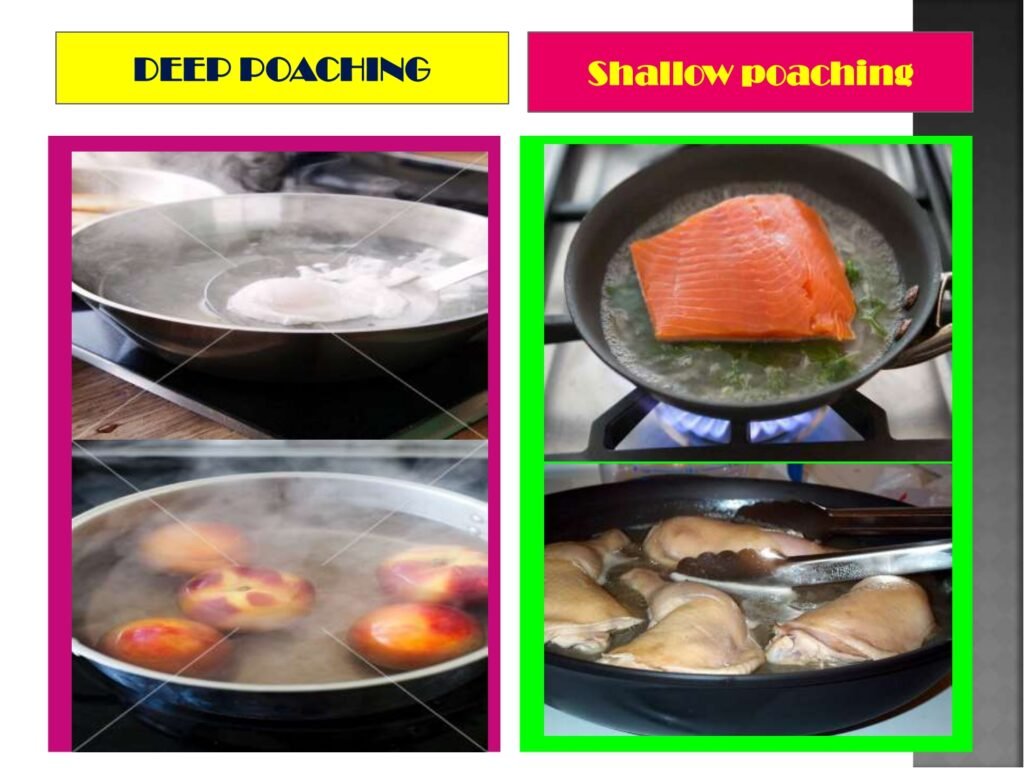
POACHING: –
Poaching is cooking slowly in a minimum amount of liquid which slowly never be allowed to boil but should be just off boil.
Fish, fruits and eggs are poached. When poaching eggs, a little vinegar and salt are added to the liquid to help in quicker coagulation. There are two ways of poaching.
- Shallow poaching.
- Deep poaching.
Shallow Poaching: –
Shallow poaching foods to be cooked by this method, such as cut fish and chicken, are cooked in the minimum of the liquid, that is water stock milk or wine. To prevent the liquid boiling bring to the boil on top of the stove and complete the cooking in a moderate hot over approximately.
Deep Poaching: –
Deep poaching eggs are cooked in approximately 8 cm of gently simmering water. whole fish Salmon. Slices of fish on the bone turbot, grilled cod, salmon and whole chicken may be deep poached.
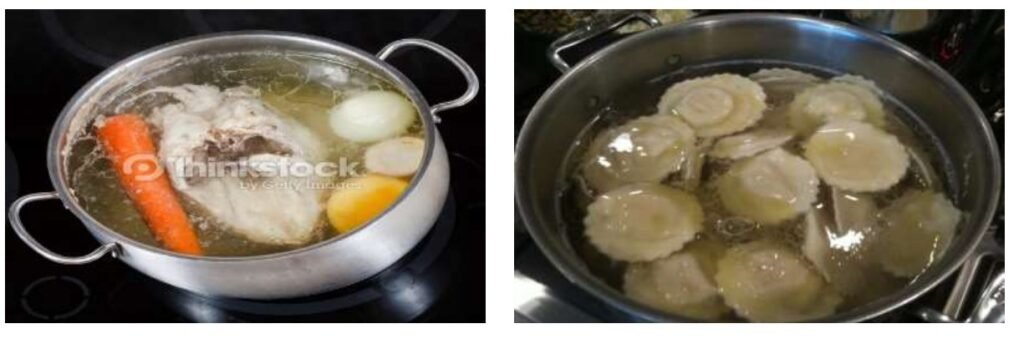
BOILING: –
Boiling is a method by which food is cooked in adequate quantity of water. For example, Boil Potatoes, eggs, Rice and vegetable Etc. This could be water, Court- bouillon, Milk or Stock.
Water boils at 212-degree F (100 degree C) at sea level No matter how high the burner is turned, The temperature of the liquid will go no higher. Boiling is generally reserved for vegetables and certain starch products. The high temperature would cause protein foods to toughen (meats and Fish) and the rapid bubbling would break up delicate products.
Advantage: –
Boiling is a safe and simple method of cooking, also the food does not get charred.
It is suitable for large scale cooking. Boiled food is also digested easily.
Disadvantages: –
While boiling, water soluble nutrients are lost if the water in which food is boiled is discarded, some people may not like boiled food as they find it bland.
The taste of boiled food can be enhanced by adding lemon or other herbs and spices.
STEWING: –
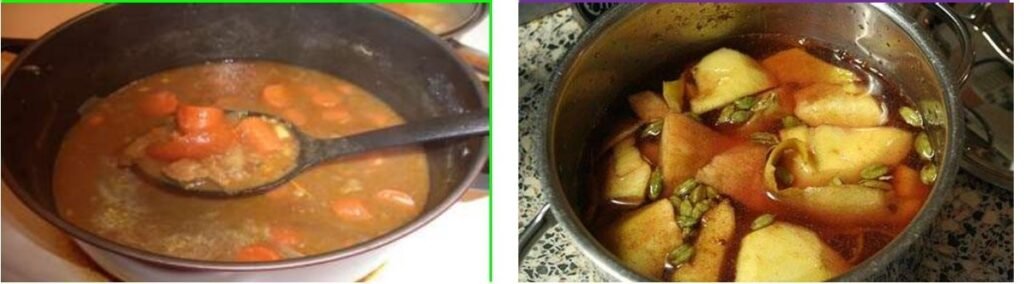
This is a very gentle method of cooking in a close pan using only a small quantity of liquid. The food should never be more than half covered with the liquid, and the food above this level is thus really cooked by steam. As the liquid is not allowed to boil during cooking, for that reason cooking process is very slow.
some stew foods are Coq au vin, corn stew, Irish stew, navarin etc.
ADVANTAGES: –
Healthy Method of cooking as little/no oil is used.
Good become soft and digestible.
Soft food does not break apart easily.
DISADVANTAGES: –
Require more energy (fuel) to the longer cooking time.
STEAMING: –
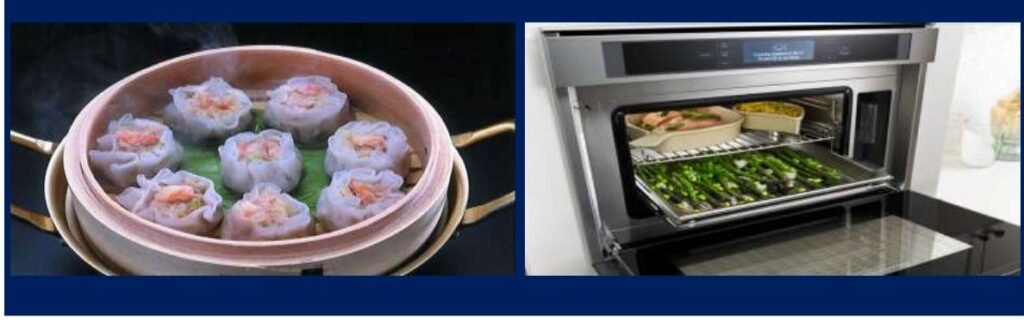
The food to be cooked is surrounded by plenty of steam from fast boiling water.
Directly or by having the food in a basin or other dish placed in steam or boiling water.
This is a slow process of cooking and only easily cooked food can be prepared by this method.
BRAISING: –
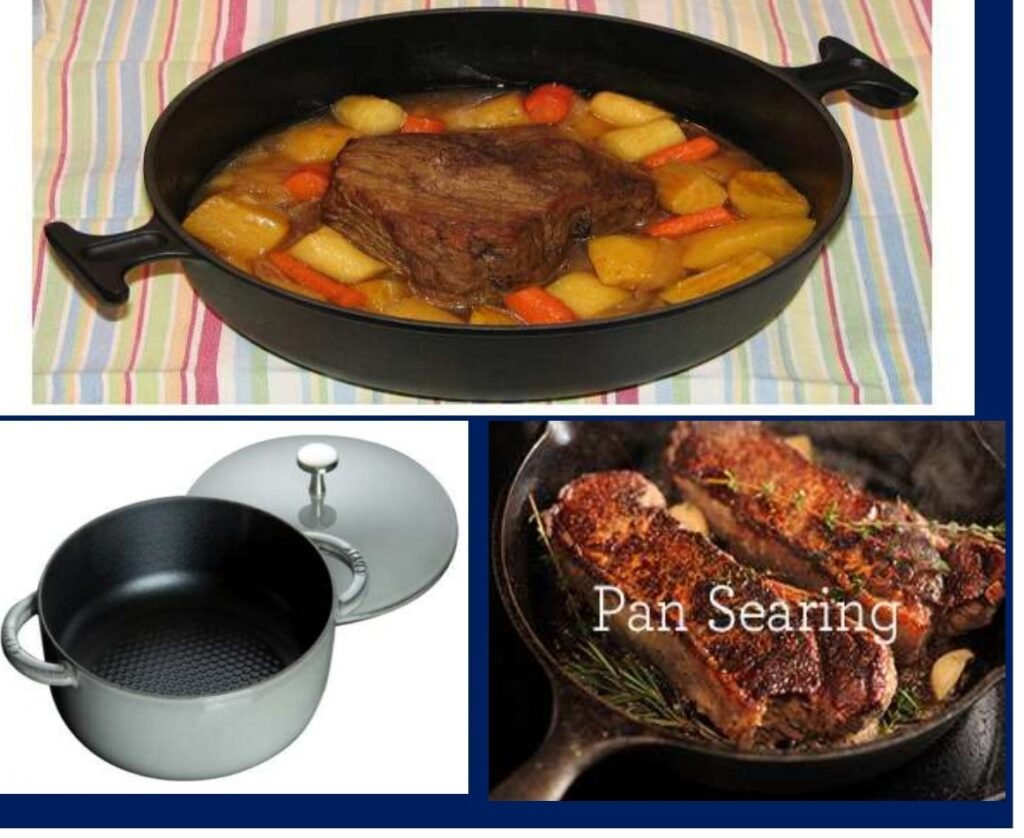
This is a combination method of roasting & stewing in a pan with a tight-fitting lid. For Correct use this method requires a special pan like casserole or stew pan. The meat should be sealed by browning on all sides and then placed on a lightly fried bed of vegetable. Stock or gravy is added which should come to two thirds of the meat. The flavoring and seasoning are then bedded. This lid is put on, and it is allowed to be cooked gently in the oven. When nearly done the lid is removed and the joints is frequently basted to glaze it.
METHODS: –
Brown Braising: –
Joints and portion cuts of meat are marinated and may be larded and then sealed Quickley by browning on all sides in a hot oven or in a pan on the stove. Sealing the joints helps retain flavor and nutritive value and gives a nice brown color. Joints are then placed on a bed of root vegetables in a braising pan, with the liquid and other flavorings, covered with a lid and cooked slowly in the oven.
white braising: –
Vegetables and sweet breads are blanched, refreshed and cooked on a bed of root vegetables with white stock in a covered container in the oven.
Advantages: –
- Older, tougher joints of meat and poultry can be used.
- Maximum flavor and nutritive value are retained.
- Variety of presentation and flavor is given to the menu.
Disadvantage: –
It takes a long cooking time. Food may have a lack of texture. it reduces the nutrient content of food.